Advisory board
-
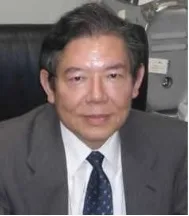
Professor Dr. Hajime Nakagawa
Professor of Disaster Prevention Research Institute at Kyoto University
Biography
Hajime Nakagawa is working as a Professor of Prevention Research Institute at Kyoto University since 1981 onwards. He obtained Bachelor, Master and Doctor Degree from Department of Civil Engineering in Kyoto University (Dissertation Title: Risk assessment of flood and debris flow). He is currently He was an Associate Professor in Sabo Section (1990), Anti-Flood Hazard Systems (1992) and Urban Flood Hazard in Bay Area (1995),under Disaster Prevention Research Institute and then Professor in Research Center for Fluvial and Coastal Disasters, DPRI, in 2001 Kyoto University. His main research topics are (1) mechanisms and prevention/mitigation schemes of flood and sediment disasters, (2) strength evaluation of river-disaster prevention facilities such as river dykes, (3) research on interdisciplinary hydraulics, and (4) echo-hydraulics, hydro science and hydraulic engineering.
-
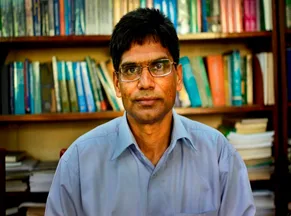
Professor Dr. Md. Munsur Rahman
Professor of Institute of Water and Flood Management, Bangladesh University of Engineering and Technology (BUET)
Biography
Md. Munsur Rahman did his BSc in Civil Engineering from BUET. He obtained MSc and PhD from Kyoto University and joined Institute of Water and Flood Management (IWFM), Bangladesh University of Engineering and Technology (BUET) in 1999. He was a Post Doctoral Research Fellow during 2002-2004 in Disaster Prevention Research Institute (DPRI), Kyoto University funded by Japan Society of Promotion of Science (JSPS).He became a professor at IWFM, BUET in 2008 and has been involved in a number of national and international research projects. During his 24years professional career, Prof. Munsur focuses his research on the formation processes of large-scale sand bars in tidal and non-tidal rivers, together with the growth of charland resources and livelihoods strategy of the people living there. During 2007-2009, he executed a collaborative research with Vietnam, Cambodia and UK funded by DelPHE on the issue of river erosion bank protection and social response. Since 2012, he has started (as PI) a 4-year-long consortium grant project with UK, Indian, and Chinese partners on the theme of health, livelihood, ecosystem services and poverty alleviation in populous deltas funded by ESPA (www.espadelta.net). The results will be useful in managing the populous deltas in a sustainable manner. He is working as Bangladesh PI of the consortium project Deltas Vulnerability in Climate Change: Migration and Adaptation (DECCMA) under CARIAA program jointly funded by IDRC and DFID. Prof Munsur is working as Bangladesh PI of the 5 year long project Disaster Prevention/mitigation against Storm Surges and floods in Bangladesh under the SATREPS program jointly funded by JICA and JSTA since 2014.General research interests are grouped into River and coastal processes, morph dynamics and river and coastal management; Ecosystem services of river, coasts and floodplain system, Indigenous approach on river, coasts and floodplain management; Bridge hydraulics and related problems.
-
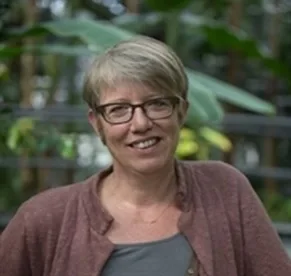
Professor Margreet Zwarteveen
Professor of Water Governance at UNESCO-IHE, Delft, The Netherlands
Biography
Margreet Zwarteveen is Professor of Water Governance at UNESCO-IHE, Delft, the Netherlands since June 2014. Prior to that Margreet was an irrigation engineer and social scientist, working since 1998 at the Centre for Water and Climate at Wageningen University. From 2012 onwards she was an Associate Professor, and also assumed responsibilities for coordinating gender studies education at the Wageningen University. Margreet studies water allocation policies and practices, focusing on questions of equity and justice. Her research includes the study of different modalities of regulating water flows (technologies, institutions) and of ways to understand (knowledge) or legitimize these. She uses an interdisciplinary approach, seeing water allocation as the outcome of interactions between nature, technologies and society. In a project financed by the Netherlands Organisation for Scientific Research, she works with a number of colleagues from Benin, France and Morocco to study how the introduction of supposedly water efficient technologies (drip irrigation) is accompanied with, and causes, changes in water tenure relations and water distributions that favor some people more than others. An interesting new project that she is coordinating similarly sets out to explore how new investments in irrigation systems along the Nile in Ethiopia, Sudan and Egypt re-allocate water and water-related benefits, tracing what this means for different groups of people and for ecosystems. This project is part of the CGIAR Water, Land and Ecosystems Program. In her work, Margreet favors an interdisciplinary approach, seeing water allocation as the outcome of interactions between nature, technologies and society.She is also involved in several research projects funded by NWO-WOTRO, such as The Globalization of Water Struggles and Hydropower development in the context of climate change.
-
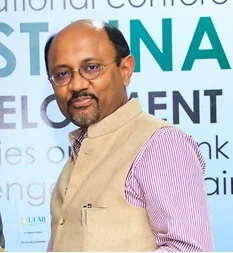
Professor Rajib Shaw
Disaster Prevention Research Institute, Kyoto University, Japan
Biography
Professor Dr. Rajib Shaw is the Executive Director of the International Programme Office of the Integrated Research on Disaster Risk (IRDR) programme hosted at the Institute of Remote Sensing and Digital Earth in Beijing. Prior to joining IRDR Prof. Shaw was a Professor in the Graduate School of Global Environmental Studies of Kyoto University, Japan. He has extensive experience in disaster risk reduction (DRR) research and has worked closely with local communities, NGOs, governments and international organizations in Asia. His research expertise includes community-based disaster risk management, climate change adaptation, urban risk management, and disaster and environmental education. He is the editor of a book series on disaster risk reduction, published by Springer, and is Co-chair of UN ISDR’s Asia Science Technology Academic Advisory Group (ASTAAG). Shaw has published extensively in scientific journals and books. He is currently the President of Asian University Network of Environment and Disaster Management [AUEDM], and the Co-chair of UN ISDR Science Technology Academia Stakeholder Group. Professor Shaw has extensive publications in different journals, books and edited volumes.
-
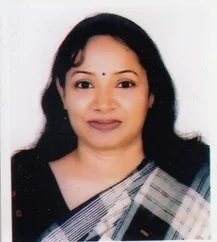
Professor Mahbuba Nasreen
Director and Professor of Institute of Disaster Management and Vulnerability Studies at University of Dhaka
Biography
Mahbuba Nasreen is the founding Director of Institute of Disaster Management and Vulnerability Studies at University of Dhaka. Dr. Mahbuba Nasreen has been involved in research in the areas of theory, gender, disasters, environment, climate change, education, social inclusion, indigenous community and other areas of social development since late eighties. She has joined as a Lecturer in the Department of Sociology in 1988 and became Professor at the same department in 2005, University of Dhaka. After obtaining MSS in Sociology from the University of Dhaka, Dr. Nasreen received Commonwealth Scholarship for pursuing her PhD Degree in New Zealand. Her dissertation topic was“Coping with Floods: the Experiences of Rural Women in Bangladesh”. She obtained PhD in 1995. Prof. Nasreen is the first woman attaining the PhD research who, since the mid-90s, forcefully arguing that women are contributors to resilient rather than conventional viewing of them as mere victims of disasters. As a member of the National Disaster Management Advisory Committee, Ministry of Disaster Management and Relief (MoDMR), Government of the People’s Republic of Bangladesh (GoB) Prof. Nasreen contributed to policy making in reducing disaster risks and other relevant areas of national and international drivers.
-
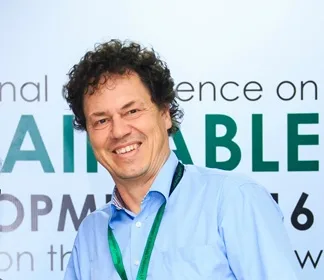
Professor Boris Braun
Professor of Human and Economic Geography, Department of Geography at University of Cologne, Germany
Biography
Dr. Boris Braun is a professor for Human and Economic Geography, Department of Geography, at University of Cologne. He completed his Diploma (1992), PhD (1994) and Habilitation (2001) at University of Bonn. Professor Boris has over 23 years of teaching and research experience in various reputed universities in Germany. He started his journey, as a Research associate in the Department of Geography at University of Bonn since February 1992 and then became the Assistant professor of Department of Geography at University of Bonn in 1995. He joined as professor (fixed-term contract) for Economic Geography, Faculty of Economics at University of Mannheim in 2002. Then he also worked as a professor in Department of Geography in University of Bamberg. Prof. Braun started his journey as a University professor for Human and Economic Geography, Department of Geography, University of Cologne in January 2008. His research interests are environmental economic geography, environmental management, industrial and urban change; environmental and social impacts of globalization, economic and social aspects of natural hazards in South Asia (mainly India and Bangladesh), Australia, Germany and Western Europe. Prof. Braun has worked as a Scientific Adviser in “GeographischeRundschauâ for the German Research Foundation (DFG), the German Academic Exchange Service (DAAD) and several national and international journals. He was the board member of the Association for Australian Studies (1998-2007).
-
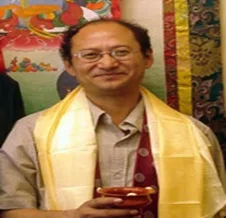
Professor Mukta S. Lama (Tamang)
Professor of Central Department of Sociology/Anthropology, Tribhuvan University
Biography
Professor Mukta S. Lama (Tamang) completed his PhD from Cornell University with the dissertation entitled “Himalayan Indigeneity: Histories, Memory, and Identity among Tamang in Nepal”. Dr. Lama, an indigenous rights activist is a Professor of Sociology/Anthropology in Tribhuvan University, Nepal. He holds a PhD in anthropology from Cornel University entitled, 'Himalayan Indigeneity: Histories, Memory and Identity among Tamang in Nepal'. He has conducted several research studies in the areas of social inclusion, indigenous peoples and other excluded and minority groups. He has published several articles, books and contributed to journals and presented several papers in the national and international arena. His publications include Cultural Diversity and Democracy in Nepal, Himalayan Research Bulletin, (21)2, 2002, The Working of Democracy in Nepal,Seminar, April 2005, Emotional Aspects of Peer Relations among Children in Rural Nepal (with Pamela Cole and Alice Walker), in X. Chen, D.C. French, and B.H. Schneider (eds.) Peer Relationships in Cultural Context (2006), and Culture, Caste and Ethnicity in the Maoist Movement, Studies in Nepali History and Society, (11)2, 2006. He was Senior Research Fellow at Nepal School of Social Sciences and Humanities from 1 March 2012 to 28 February 2013.
-
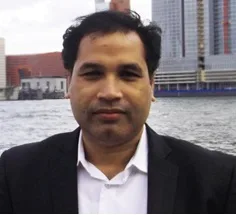
Professor Abdul Shaban
Professor at School of Development Studies, Tata Institute of Social Sciences, Mumbai, India.
Biography
Abdul Shabanis a professor at the School of Development Studies, in Tata Institute of Social Sciences. He has done his Masters on Geography from Jawaharlal Nehru University (JNU), New Delhi, and M.Phil and PhD from Indian Institute of Technology (IIT), Mumbai. He has published 3 books and over 40 papers in various refereed journals and edited books. Dr. Shaban has been Visiting Professor at the Erasmus School of History, Culture and Communication, Erasmus University, The Netherlands; Department of Geography, University of Paris- 7, Paris, France, and at University of Masaryk (Brno) and Palacky University, Olomouc, Czech Republic. He has also been Fellow at the Department of Geography and Environment, LSE, London. He was Commonwealth Academic Staff Fellow at Cities Programme, London School of Economics and Political Science (LSE), London during 2011-12. He was member of MahmoodurRahman Committee, set up by Government of State of Maharashtra, and Post-Sachar Evaluation Committee, Ministry of Minority Affairs, Government of India. Currently he is, a Deputy Director TISS Tuljapur Campus, Osmanabad, Maharashtra, and Professor at School of Development Studies, TISS, Mumbai, a Chairperson of International Relations Office (IRO), TISS, Mumbai and a member of the Commission of Inquiry to Study Socio-Economic Status of Muslims in the State of Telangana under chairmanship of Shri G. Sudhir (IAS).
-
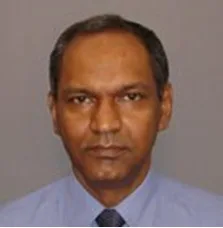
Professor E.r.nimal Gunawardena
Professor of Agricultural Engineering at the University of Peradeniya, Sri Lanka
Biography
E.R.N.Gunawardena is a Professor of Agricultural Engineering at the University of Peradeniya, Sri Lanka. He completed his BSc in Agriculture from the same university. He obtained his MSc and PhD in Soil and Water Engineering from Cranfield University in UK. During his 30 years of career he served as Head of the Department of Agricultural Engineering, Dean of the Faculty of Agriculture, and Deputy Vice Chancellor of the University of Peradeniya. He was a Fulbright scholar at the University of Athens, Georgia, USA and worked with the Institute of Hydrology and Oxford Forestry Institute of UK on collaborative research projects.He has published extensively in the areas of hydrological simulation, irrigation, drainage, and watershed management and was involved in formulating the protected area network of Sri Lanka and drafting the forestry sector master plan. His current research interests lies in the area of Integrated Water Resources Management. He was the first country coordinator of the CapNet, a UNDP project on capacity building in Integrated Water Resources Management (IWRM) and later became the Executive Director of SaciWATERs in Hyderabad India and the Project Director of the Crossing Boundaries Project, a regional capacity building project on IWRM, Gender and Water. As a consultant, he has undertaken various assignments in Sri Lanka for the IUCN, USAID, ADB, and FAO to translate research into practice. He also served as an international consultant to the UN/ESCAP and UNOPS.
-
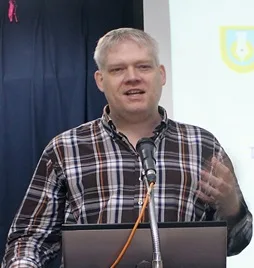
Dr. Jeroen Warner
Associate Professor, Sociology of Development and Change Group at Wageningen University and Research Centre (WUR)
Biography
Dr. Jeroen Warner is the Associate Professor, Sociology of Development and Change Group at Wageningen University and research Centre (WUR). He did his MSc in International Relations from University of Amsterdam; PhD in Disaster Studies from Wageningen University. Dr. Warner teaches, trains and publishes on domestic and transboundary water conflict, participatory resource management, and governance issues. His main research interests are in social resilience and the disaster studies domain. He has long experience of working in Bangladesh. Dr. Warner’s expertise is in Disaster Studies, Politics, Water Management, and Risk Analysis.
-
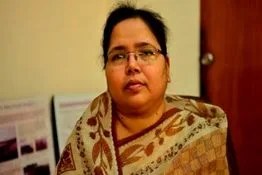
Professor Umme Kulsum Navera
Professor in the Department of Water Resources Engineering, Bangladesh University of Business & Technology (BUET)
Biography
Professor Navera completed BSc in Civil Engineering from BUET. She holds a Master degree in Riverine and Coastal Engineering from Asian Institute of Technology, Bangkok, Thailand and a PhD in civil Engineering from Cardiff University, United Kingdom. She is currently working as a Professor in the Department of Water Resources Engineering, Bangladesh University of Business & Technology (BUET). Her areas of expertise and research include model development for predicting wave-current interactions, sediment transport process analysis in near-shore coastal waters, wave hydrodynamics and beach erosion problems in Bangladesh. Her fields of interest are Eastuarine& Coastal Hydraulics, Mathematical Modeling, Open Channel Hydraulics and Fluid Mechanics.
-

Professor William H. Derrenger
Founding Vice Chancellor of Canadian University of Bangladesh
Biography
Professor William H. Derrenger is the Founding Vice Chancellor of Canadian University of Bangladesh, introducing Practice based education models to Bangladesh’s higher education scenario. Professor Derrenger is attempting to shift the higher education paradigm away from traditional academic, class based approaches to ones that give students opportunities to learn and apply fundamental concepts in the conduct of real work.
He worked for ULAB as a full time Professor and Dean of School of Business where he introduced “The Business Process” across all course areas in the Business School as a paradigm shift in the delivery of UGC’s mandated, University level Business School curriculum in the context of practice based business processes. Professor Darrenger’s innovative teaching and learning strategies gave USB’s BBA graduates a competitive advantage in finding suitable, entry level employment due to their practical grasp of the needs of local employers. Prior to work at ULAB, he was a Professor and Associate Dean-Faculty of Business at Northern University, Bangladesh where he used case studies to impart Strategic Planning, Organizational Development, Entrepreneurship and Business Communication skills to BBA/MBA candidates with academic, social and economic deficits.
William H. Darrenger served different business, finance and development organizations in USA and Bangladesh for a quite long time. He has studied BA in Economics at Baylor University, Waco, Texas and MA, Educational Psychology, Strategic Planning & Human Capital Development at American International College, Springfield, Massachusetts, USA.
-

Dr. Megan Farrelly
Senior Lecturer in Human Geography, located within the School of Social Sciences at Monash University
Biography
Over the last decade Dr Farrelly has investigated various governance and institutional mechanism within the Australian urban water sector to advance a transformation in the functionality and liveability of urban and rural environments. Her research interests span environmental governance, sustainability transitions, experimentation, learning and evaluation. Her current research focuses on the intersection of multiple infrastructure sectors (i.e. water, energy, green infrastructure), in order to understand what role this nexus plays in bringing about policy and practice change. In addition, and supported by PhD researchers, DrFarrelly has begun to explore the urban water governance challenges within Bangladesh and Indonesia. Dr. Farrelly has been heavily involved in the Cooperative Research Centre for Water Sensitive Cities, which seeks to inform the development of sustainable, resilient and productive cities and towns. She has led various social science research projects (i) examining how to transform storm water management practices; (ii) bridging evaluation studies, impact assessment and research adoption to inform the development of an evaluation and learning framework to support large-scale, complex research projects achieve maximum impact. Resulting from this body of research Dr Farrelly has been engaged in a number of external consultancies for Government Agencies and local governments.
-
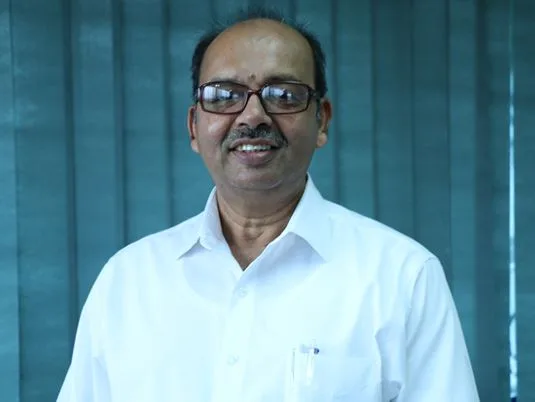
Professor Dr. Hamidul Huq
Conference Convener
Professor, Department of Economics at United International University, Dhaka, Bangladesh
Biography
Dr. HamidulHuq is Professor of department of Economics ta United International University (UIU). His has specialization is in the areas of sustainable livelihoods, integrated coastal zone management, integrated water resources management, disaster management, ecosystem services and poverty alleviation, sustainability, and Interdisciplinary Research and Education. Dr. Huq has a Masters with Honours in Social Welfare from University of Dhaka, and a PhD in Rural Development Sociology from Wageningen University, the Netherlands. His PhD dissertation was titled “People’s Practices: Exploring contestation, counter-development, and rural livelihoods”. Prof.Huq has been engaged in collaborative interdisciplinary education and research projects on ecosystem services and poverty alleviation, IWRM with IWFM, BUET, Wageningen University, Southampton, Exeter, Oxford, and Dundee universities. He is a postdoctoral researcher of UNESCO-IHE Institute for Water Education, Delft, the Netherlands in the field of IWRM. Prof.Huq has 25 years of working experience in leading NGOs, including Village Education Resource Center, Resource Integration Centre, and UnnayanShahojogy Team (UST). He is the founder of UST. He served in leadership positions at ADAB (NGO apex body), Bangladesh ShishuAdhiker Forum and South and Southeast Asia based forums and networks to do advocacy and lobby for pro-people development policies and programs. Currently Prof. Huq teaches Master in Development Studies (MDS) at UIU.
-
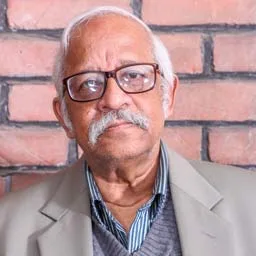
Professor Dr. Amirul Islam Chowdhury
Professor of Economics at United International University, Dhaka, Bangladesh
-
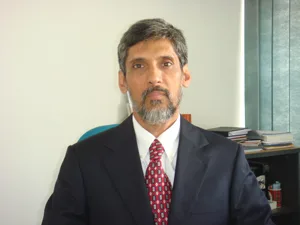
Professor Dr. M. Rezwan Khan
Professor, United International University, Dhaka, Bangladesh
-
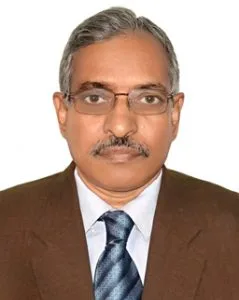
Professor Dr. Hasnan Ahmed
Pro-Vice Chancellor, United International University, Dhaka, Bangladesh
-
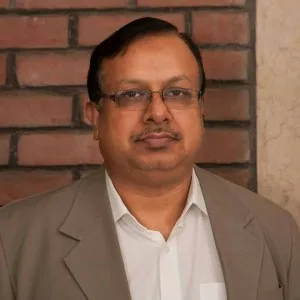
Professor Dr. Chowdhury Mofizur Rahman
Vice Chancellor, United International University, Dhaka, Bangladesh